Research Philosophy
The Autonomous Unmanned Systems Laboratory is engaged in innovative research on geometric control, geometric estimation, and nonlinear identification, with particular emphasis on safe and reliable autonomy for aerospace vehicles. Our motto is To Translate Good Theory to Good Practice. Our innovations include stable and robust geometric control schemes for rigid body and multi-body systems, smooth and stable guidance schemes for aerospace vehicles through given waypoints, stable and robust geometric estimation schemes for rigid body and multi-body systems, and data-driven and data-enabled geometric active disturbance rejection control schemes using novel disturbance observers and extended state observers. In keeping with our motto, our guidance, navigation and control schemes emphasize stability, robustness and computational efficiency, in guaranteeing safe and reliable autonomy of robotic vehicles. This emphasis is based on the known fact that optimality is secondary to stability, because an optimal nonlinear feedback control law can be obtained if the corresponding Hamilton-Jacobi-Bellman partial differential equation can be solved exactly, in which case the optimal value function serves as a Lyapunov function.
Google Scholar
Research Gate
LinkedIn
Team Members
Current Members:
Past Members:
Recent Results
Advancing Rigid Body Attitude Control Toward Global Asymptotic Stability
Albany Pine Bush Prescribed Burn:
Video Demonstrating the ZED 2i Stereo Camera running the FTS-PE at the Albany Pine Bush Prescribed Burn
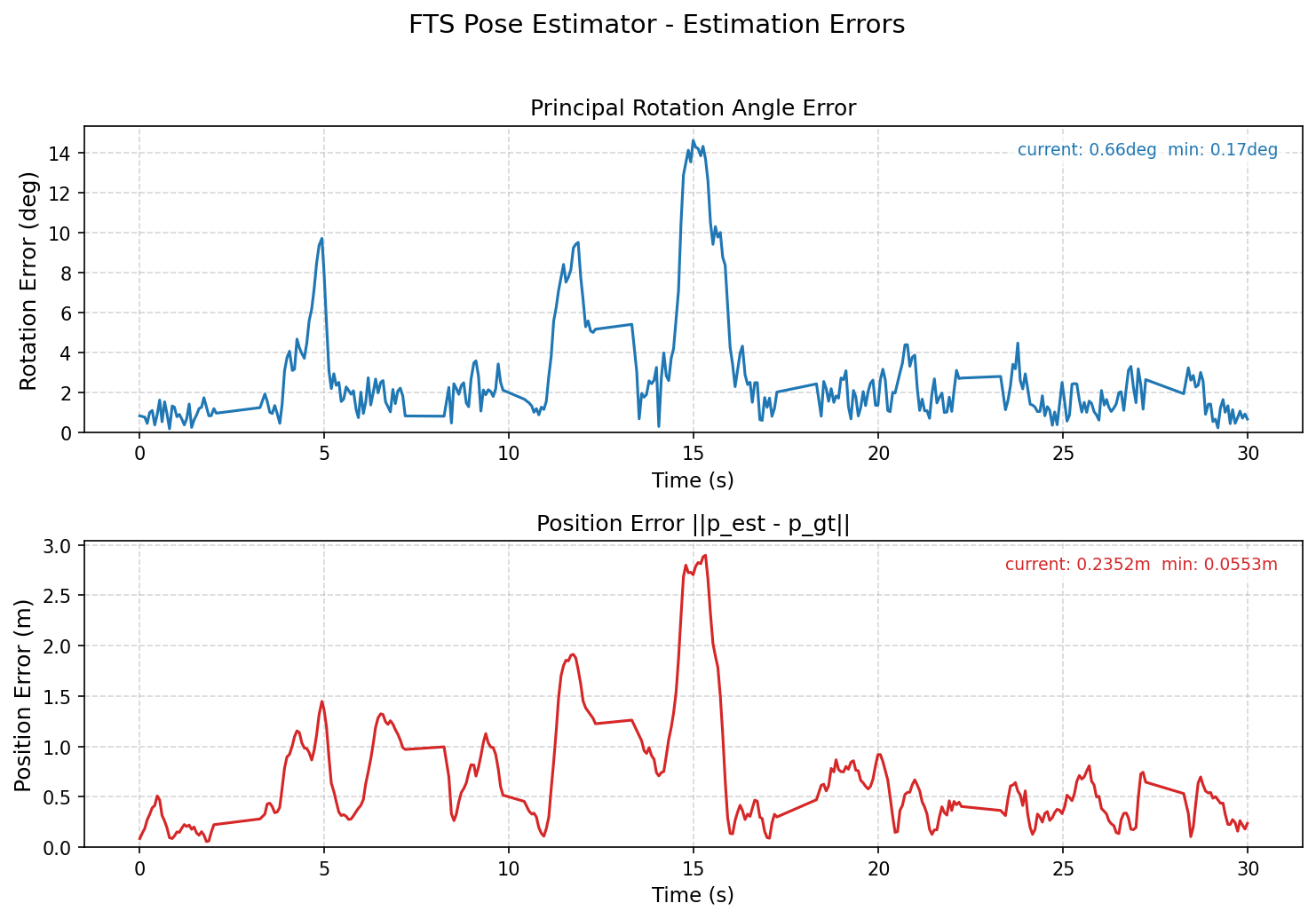
Graphical Interpretation of Real Time FTS-PE Demonstrates it Returns to Almost Zero Error
ESO Based Disturbance Rejection Tests:
Plain PX4 without disturbance rejection in front of fan array wind tunnel.
PX4 with fast finite-time stable ESO-based disturbance rejection in front of fan array wind tunnel.
PX4 with exponentially stable ESO-based disturbance rejection in front of fan array wind tunnel.
Recent Publications
Click here to view a list of our Recent Publications and Conference Papers.